

Tom Rhea is the president of the Electronic Arts Foundation, has done extensive work as an electronic music clinician, and has served as a synthesizer consultant to keyboard players such as CK Advisory Board member Keith Emerson. Rhea has a Ph.D. in music from the George Peabody College, in Nashville, Tennessee, with The Evolution Of Electronic Musical Instruments In The United States as his dissertation topic. Tom is also a member of MENC (Music Educators National Conference) and the Audio Engineering Society, and has written instruction manuals for Moog Music’s performance‑oriented synthesizer line.
– Editor
The Electronic Arts Foundation is a non‑profit organization that promotes electronic music and other related arts, and preserves artifacts and instruments from the history of electricity and the arts. The foundation was chartered in 1972 by Tom Rhea, president; David VanKoevering, vice‑president; and Leslie Trubey, secretary‑treasurer.
The EAF was formed because we felt that there is an information void between academic societies interested in electronic music, the business community that sells electronic musical instruments, and the performer and composer. The flow of information from the university is often not relevant to the needs of the working musician, and information from manufacturers is limited in scope and colored for obvious reasons. It has also occurred to us that, in a time of easy information storage and retrieval, it is a shame that so little has been done to document the explosive development of electronic music. Ironically, the pianos played by Mozart and Beethoven have been preserved, but up to now very few people have realized that the fundamentally new concept of using electricity to make music is of equal historical significance. In a world of video tape, magnetic tape, and film, we don’t even have a decent library of current developments, much less an archive of interviews and published documents concerning pioneer developments. I was particularly struck by our collective myopia when the head of a distinguished European electronic music studio told me that the “relics” (some of the earliest electronic instruments and equipment) had been either cannibalized for parts or thrown into a canal. The Foundation hopes to fill some of the information voids and preserve artifacts that will surely be of interest to coming generations.
The idea of the Foundation grew out of a discussion between David VanKoevering and myself. VanKoevering is an inveterate collector who has owned several hundred acoustic and electronic musical instruments. He did a number of educational television shows on the science of sound that included and eventually spotlighted the synthesizer. In the early Seventies he pioneered the sale of synthesizers in music stores, where he found that many dealers were doubtful about the musical utility and sales potential of the new instruments.

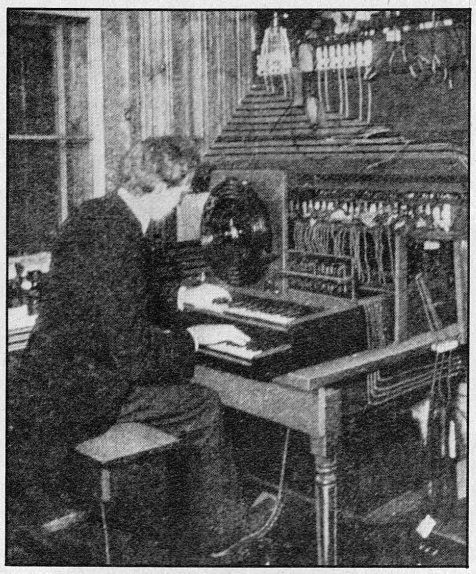
Dave visited me in Nashville in 1972; Bob Moog had told him that I was finishing a dissertation on the history of electronic musical instruments, and he was naturally curious. Although his announced reason for calling on me was to show me the Minimoog, we soon discussed the broader field of electronic musical instruments throughout history. I had found that the marriage of electricity and music was at least 140 years old (in 1837, P.C.E. Page of Salem, Massachusetts, invented the electronic tuning fork). This perspective made it apparent that in our rush to “synthesize” we had forgotten many techniques, designs, and musical values that had already been discovered but remained buried in the past. Even now, the performing public is only vaguely aware of the musical potential that electro‑mechanical electronic instruments reached in the past. When I told VanKoevering this viewpoint and showed him some of the hundreds of photographs, patent copies, and other artifacts that I had collected during several years’ research he responded by saying, “None of this belongs to you.” What he meant, of course, is that the information uncovered should be shared. We brainstormed about how this could be done effectively, and he suggested that a non‑profit corporation could act as an umbrella for many activities. We envisioned expositions of instruments and festivals of electronic music, a journal to establish communication, and educational publications concerning electronic art forms and instruments. We also conceived of a comprehensive library dedicated to researching and preserving instruments and artifacts.

To this end, I moved to St. Petersburg, Florida, and went to work for VanKoevering and his partner Les Trubey. They were distributing synthesizers and Les also owned a retail keyboard store. Les got the legal wheels rolling, paid for the incorporation, and the EAF became a legal entity. The first operating funds were paid directly to the Foundation as a commission for my having written a synthesizer operations manual. So, while facing the realities of how to make a living, we created the Electronic Arts Foundation and devoted some time to its development.
Subsequent events fragmented our efforts. VanKoevering moved to Williamsville, New York, to become vice‑president of marketing for Moog Music; I followed shortly to guide sales of studio systems for Moog. Trubey devoted more time to expanding his already successful retail operation. VanKoevering is now a successful manufacturer (Vako Polyphonic Orchestron and Viking Cases); Les operates a huge warehouse/showroom (Central Music) for keyboards in the St. Petersburg area; and I am currently a consultant in electronic music, under contract to the Electronics Division of Norlin Music.
Although it has been only recently that we have been able to turn our attention toward the goals of the Foundation, some objectives have been accomplished in the intervening years. We have a collection of several dozen electronic musical instruments, including some very rare models. Among these is a Telefunken Trautonium (c. 1934), which was donated by Heinz Funk, the German synthesizer specialist. The collection also features a unique Clavivox by Raymond Scott, the well‑known band leader and creative inventor. Other instruments include an RCA Theremin, two Moog Theremins, a Hammond Novachord, several Hammond Solovox units, various early organs, prototype synthesizers (including Moogs and ARPs), a Hohner Multimonica, and a Lowrey Organo. Also, due to my initial research, we have a substantial photo and patent archive of electro‑mechanical and electrical musical instruments. Meeting educational objectives has been a problem; all of us are deeply involved in the music industry and there is a tendency to view anything written as being “biased.” However, I have written a half‑dozen operation manuals for synthesizers, Moog Sonic VI, Minimoog, and Micromoog among them, that have helped somewhat, and I have given a number of workshops for teachers concerning electronic music.
We feel that the need for the Electronic Arts Foundation is greater than ever. Music and other art forms are becoming increasingly involved with electronics. The artist needs practical information and a coherent philosophy about use of the new electronic media. We envision a resource center that would house a display of historical instruments along with the very latest developments — a place where performers could play these instruments. We see a center that disseminates information, both historical and current, regarding useful musical techniques, perhaps in part through the pages of an established magazine such as Contemporary Keyboard. Future generations deserve to have established a comprehensive library/archive that will preserve and publish records, scores, and photographs, and house a sound library for instruments.
Visionary? Perhaps. Possible and useful? Yes. Suppose that instrument manufacturers donated instruments for such a resource center. Suppose that they gave a small percentage of the money that they spend fighting each other to sustain a cooperative effort that would propel the entire industry forward. Suppose that superstars returned a small portion of what they have received from their fans back to their fans through benefit performances. Suppose that a magazine such as CK assisted by notifying its wide readership of Foundation activities. What if thousands of individuals supported the idea by becoming dues‑paying members? Suppose that the recording industry donated new releases to help establish the archives and assisted in pressing special records of performances on antique instruments that would be mailed to members gratis and sold at large. Who would benefit if these suppositions were fact? Everyone.
In a time when aggression and competitiveness are being touted as the only way of life, the arts remain activities in which everyone wins. Electronics is playing an increasingly important role in the arts. Let’s talk to each other and educate ourselves.
[Ed. Note: Dr. Rhea will be writing a series on the history of electronic keyboards in future issues of CK. In the meantime, we welcome any comments you have on the Electronic Arts Foundation and what it plans to do. Send your letters to Contemporary Keyboard, Box 907, Saratoga, CA 95070.]