
Category: Electronic Perspectives
-
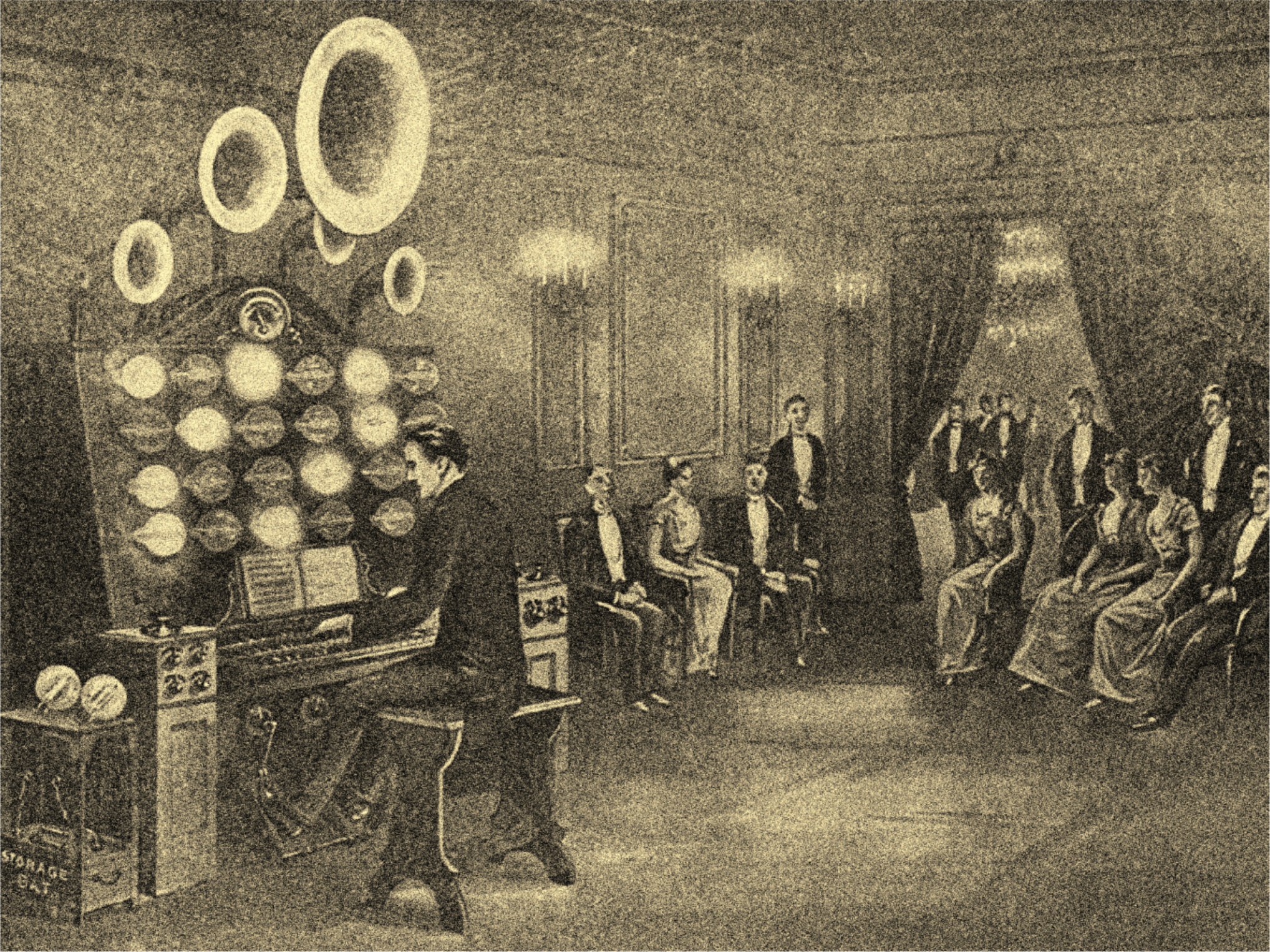
De Forest’s Music Of The Lamps (Electronic Perspectives July 1978)
Most of us have experienced the ear-shattering feedback that can happen while using a PA system. Feedback makes the amplifier act like an oscillator, creating sound. In this case the feedback path is acoustic, or airborne. The principle of regenerative feedback used in an oscillator is electrical, but it works similarly. In nature, soundmakers don’t…
-
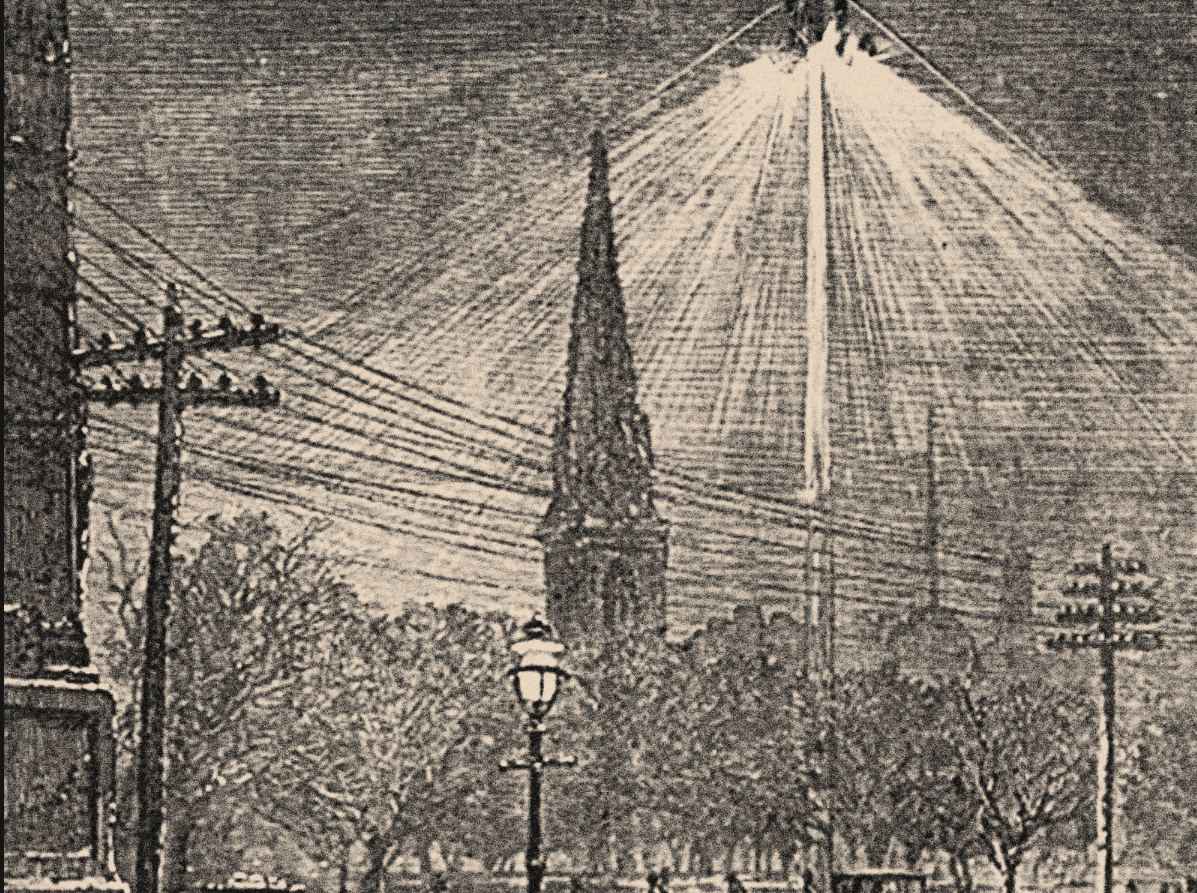
First Electronic Keyboard: Singing Arc, 1899 (Electronic Perspectives June 1978)
To make sound, something must vibrate. When you speak, your vocal cords vibrate. When you talk through a PA, the sound of your voice is transduced from mechanical energy into an electrical signal. This signal is amplified and then transduced back into sound by the speaker. In this case the original signal (your voice) isn’t…
-
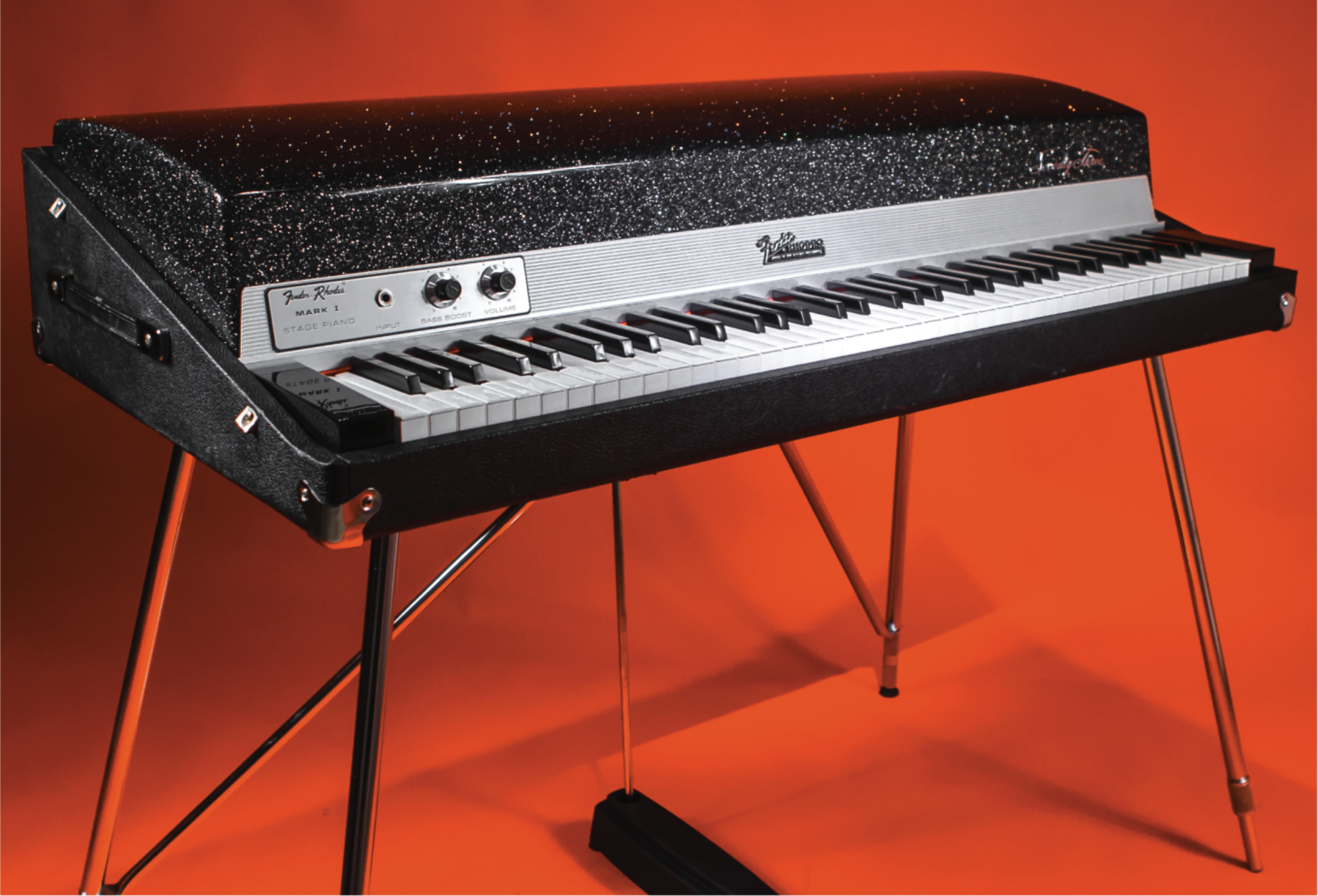
The Pianos of Harold Rhodes (Electronic Perspectives May 1978)
“Teaching is my forte—inventing is not.” These modest words come from Harold Rhodes, the inventor of the electric piano that bears his name. That Harold Rhodes is both a teacher and an inventor is well documented. By age 20, he had established a nationwide chain of music schools that specialized in teaching popular piano. Most…
-
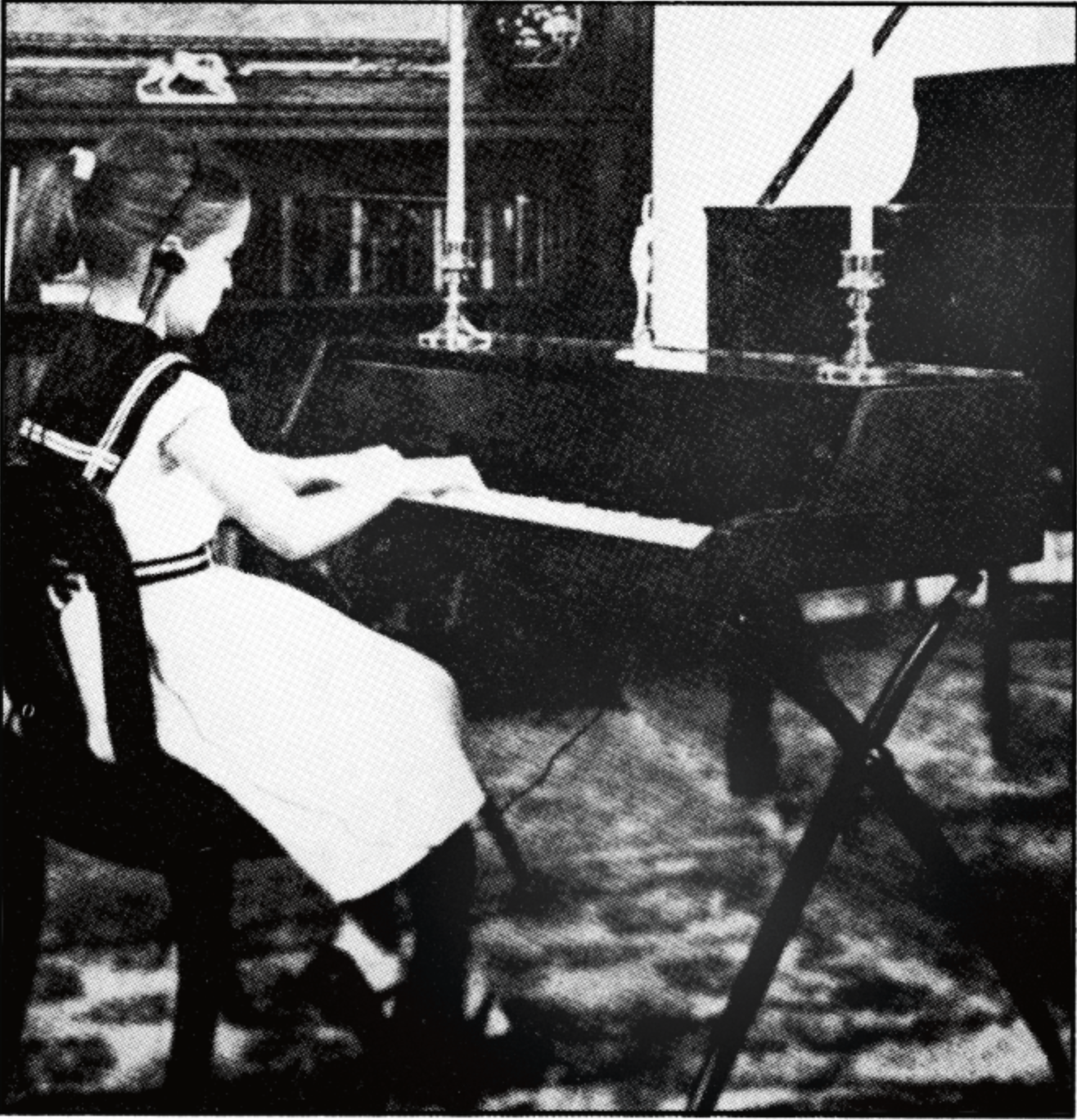
B.F. Miessner’s “Stringless Piano” (Electronic Perspectives April 1978)
The electric pianos designed by Miessner, Vierling, and Nernst established archetypes for that industry during the late ’30s and early ’40s (see my columns for Feb. and Mar. ’78). These pianos were essentially acoustic pianos lacking soundboards, with electrostatic or electromagnetic pickups. They found some use, but these instruments had problems, as explained by Miessner:…
-
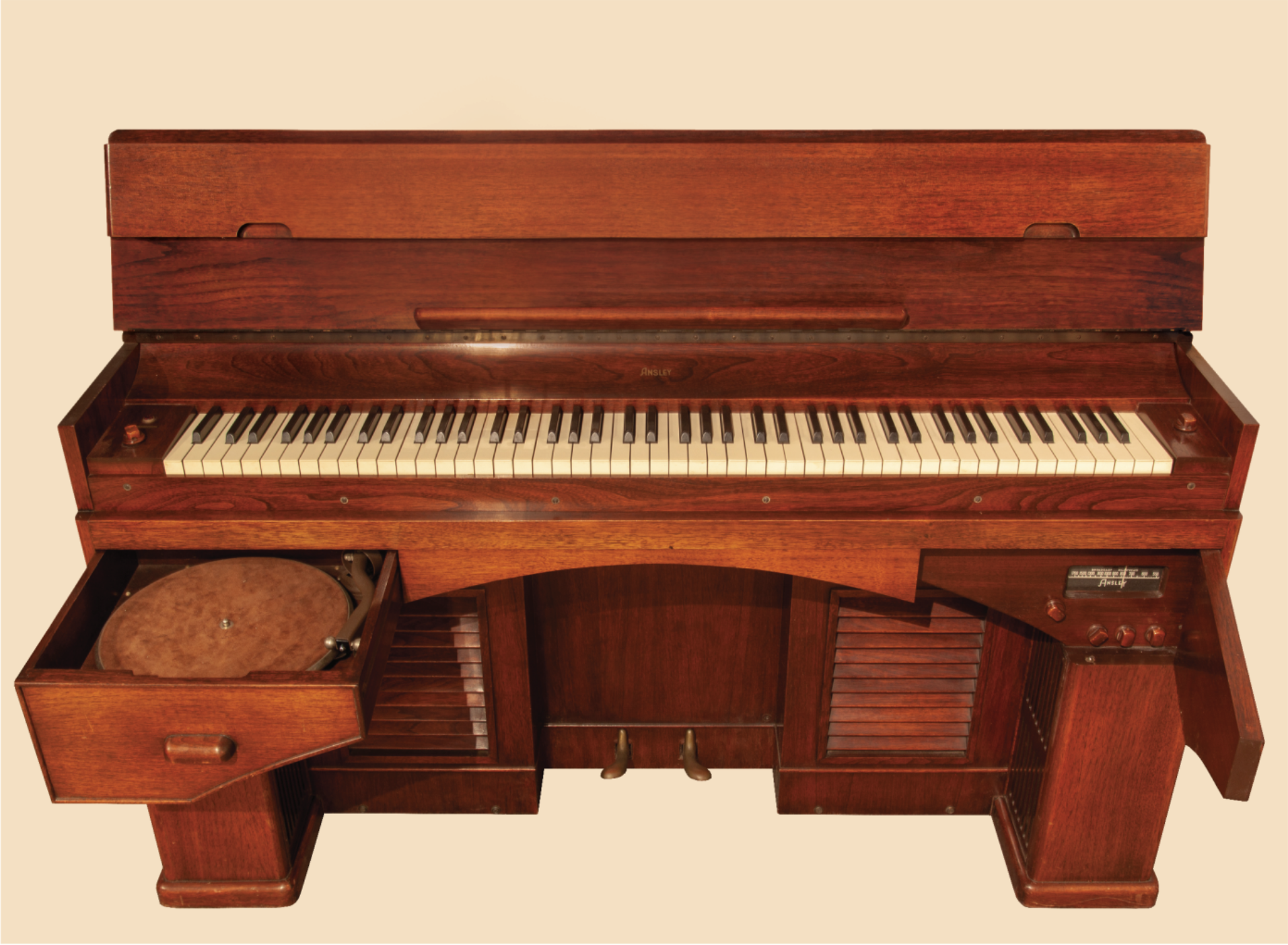
Electric Pianos: The Early Miessner Legacy (Electronic Perspectives March 1978)
After B.F. Miessner put the finishing touches on his Electronic Piano in 1932, he began licensing almost all of the electric piano industry for the next two decades. His patents were the basis of the Minipiano by Hardman, Peck, and Co., the Electone (ca. 1938) manufactured by Krakauer Brothers under the supervision of Maurice K.…
-
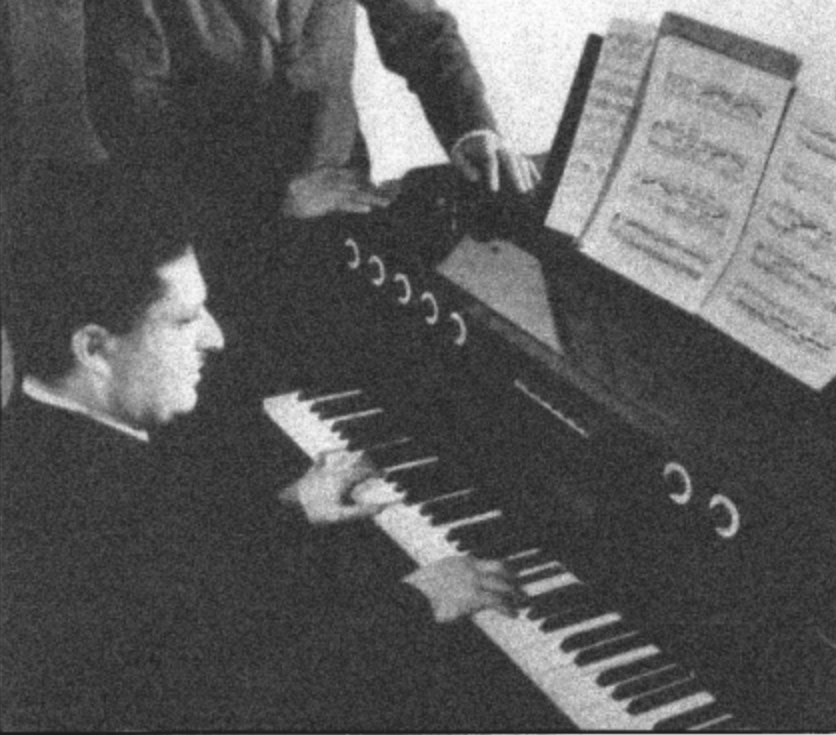
B.F. Miessner’s Electronic Piano (Electronic Perspectives February 1978)
Benjamin Franklin Miessner (born 1890) is a central figure in the development of the electric piano. His early career was in radio and electro-acoustics. In 1909 he developed an improved “cat whisker” detector used in crystal radio sets. In the ’20s he pioneered the totally electric phonograph for the Brunswick Phonograph Company. Later he produced…
-
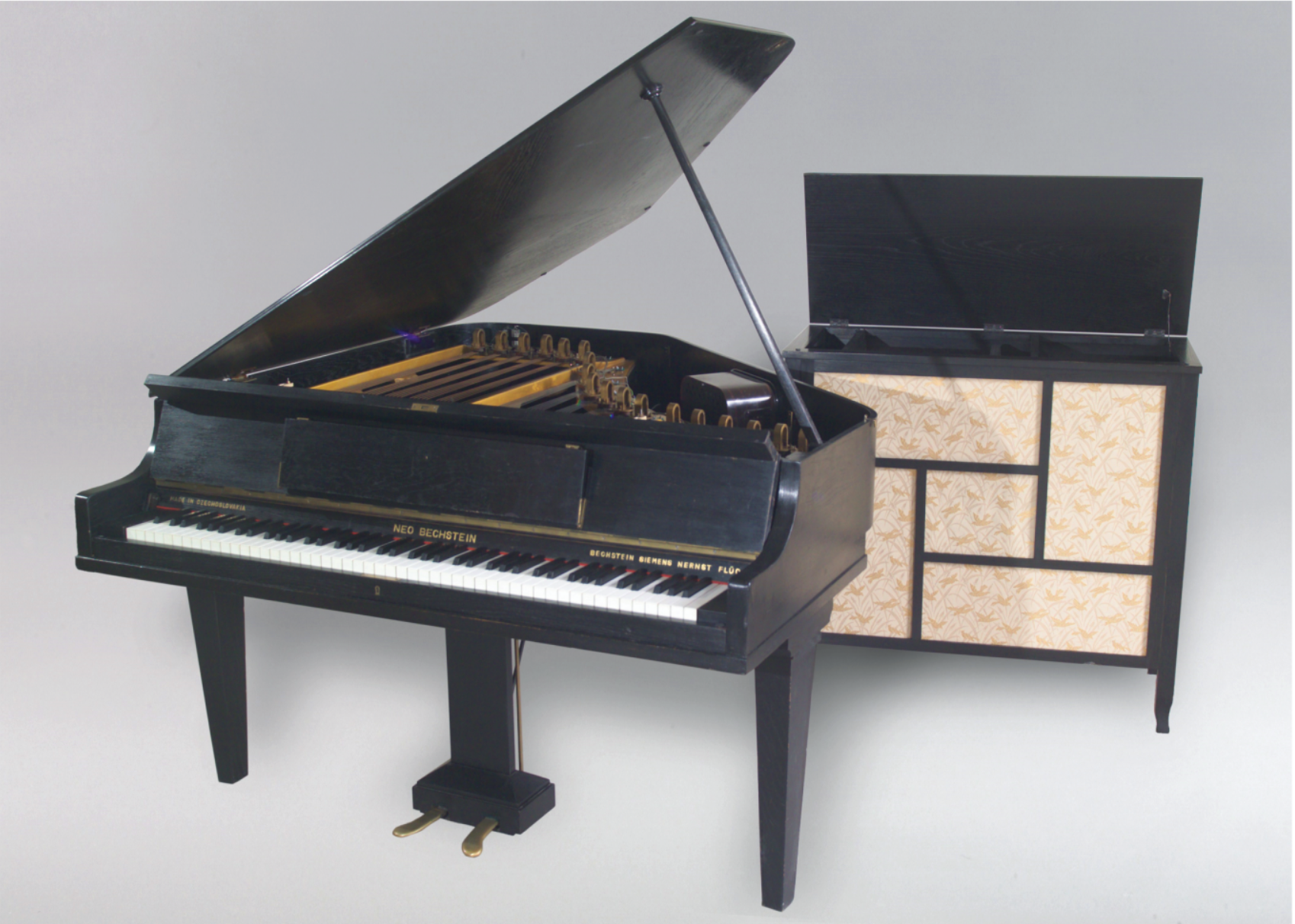
The Neo-Bechstein Electric Piano (Electronic Perspectives January 1978)
The electric guitar-on-a-slab-of-wood found in today’s rock band has a vibratory tone generator. This involves the translation of mechanical or acoustical vibration into an electrical signal that can be processed by electrical circuitry and turned into sound by a loudspeaker. Keyboards in use today that have a vibratory tone generator include the Wurlitzer and Rhodes…
-
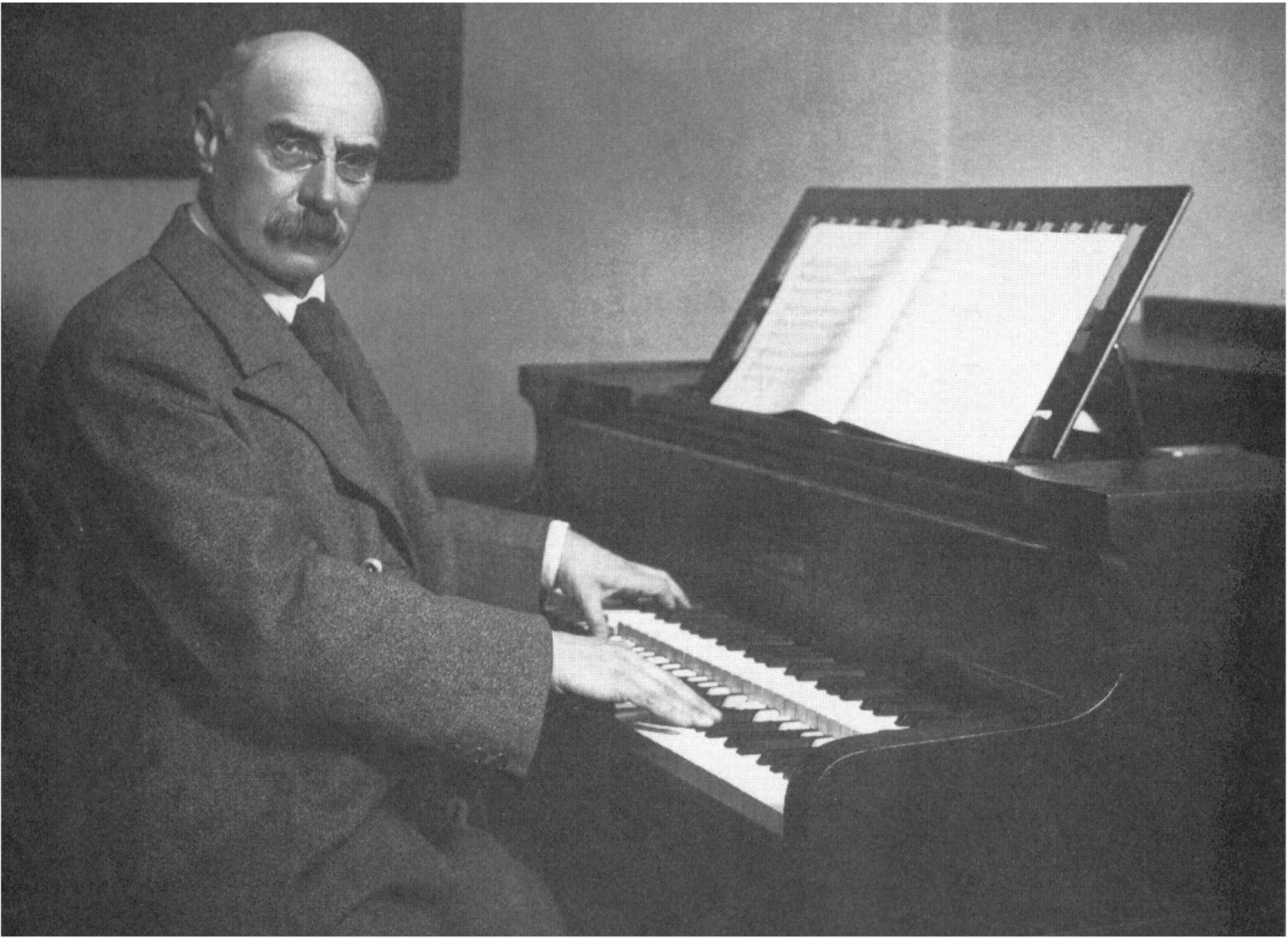
Prelude to The Electric Piano (Electronic Perspectives December 1977)
Where did the electric piano come from? Efforts to “electrify” the acoustic piano in the ’30s grew out of even earlier attempts to modify the instrument by non-electric means. The mood for experimentation was brought about when sales of pianos slumped by fifty percent during the years 1913-1921. Some blamed the decline of the piano…
-
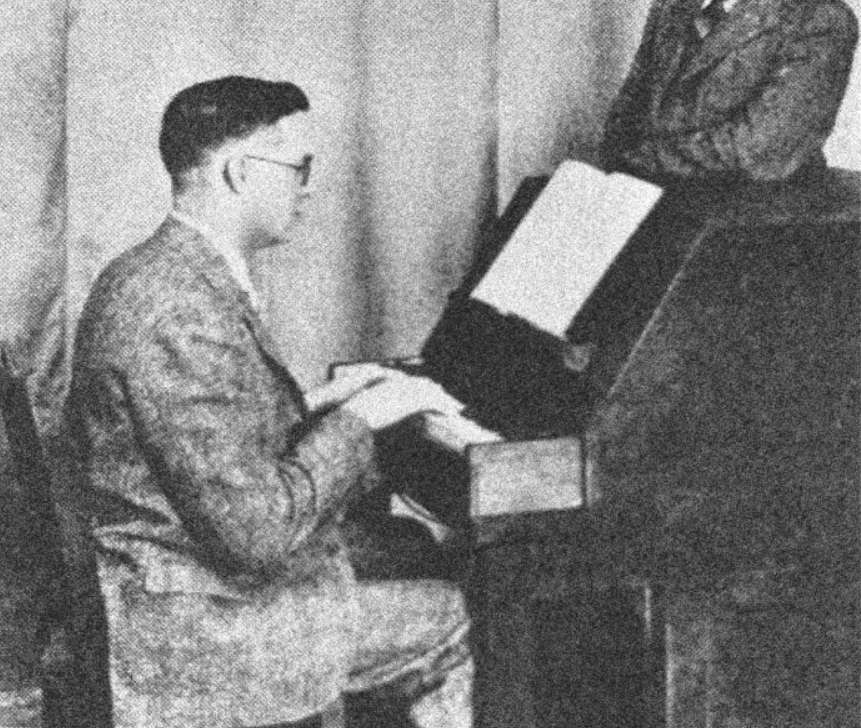
Photoelectric Acoustic-Sound Instruments (Electronic Perspectives November 1977)
In this final column in our series on photoelectric instruments, we’ll look at several keyboard instruments of yesteryear that could reproduce recorded acoustic-instrument sounds. (Yes, Virginia, the Mellotron and Orchestron have ancestors!) As explained in my September ’77 column, these instruments used the same principle as the film soundtrack. That is, a varying “mask” is…
-

The Syntronic Organ (Electronic Perspectives October 1977)
Ivan Eremeeff developed the Syntronic Organ around 1934 in collaboration with Leopold Stokowski, who was then the Director of the Philadelphia Symphony Orchestra. This instrument is yet another of the type that has a stationary, illuminated mask governing tone color. However, Eremeeff departed from the typical tone-wheel design [see C.K., July, Aug., Sept. ’77]. Instead…
-
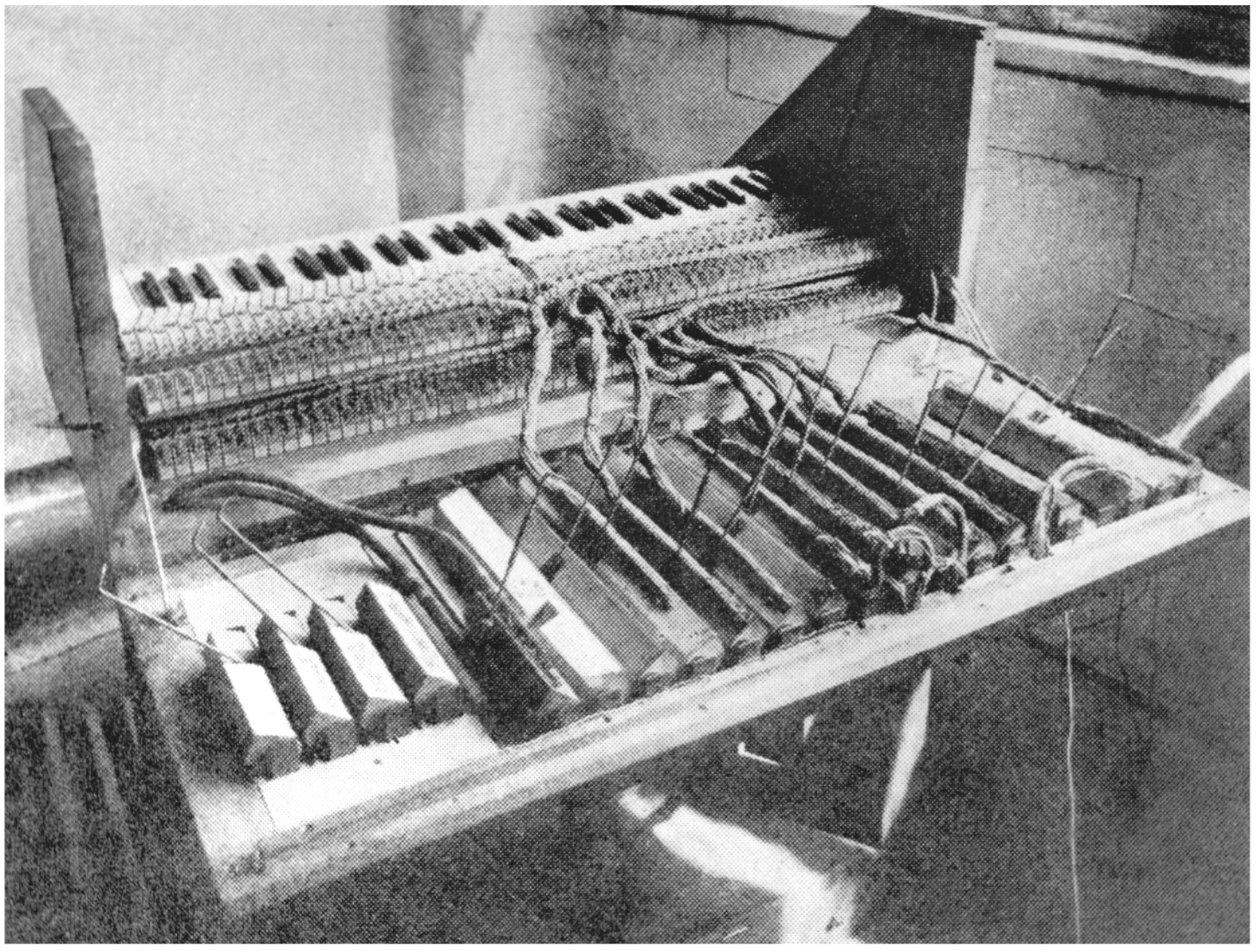
Photoelectric Instruments Part III: The Cellulophone (Electronic Perspectives September 1977)
The “light chopper” tone wheel of the type found in the photoelectric instruments described in my last two columns acts to interrupt the path between a light source and a photoelectric cell. The basic concept is that the amount of light that falls on a photoelectric cell can be manipulated over time in such a…
-
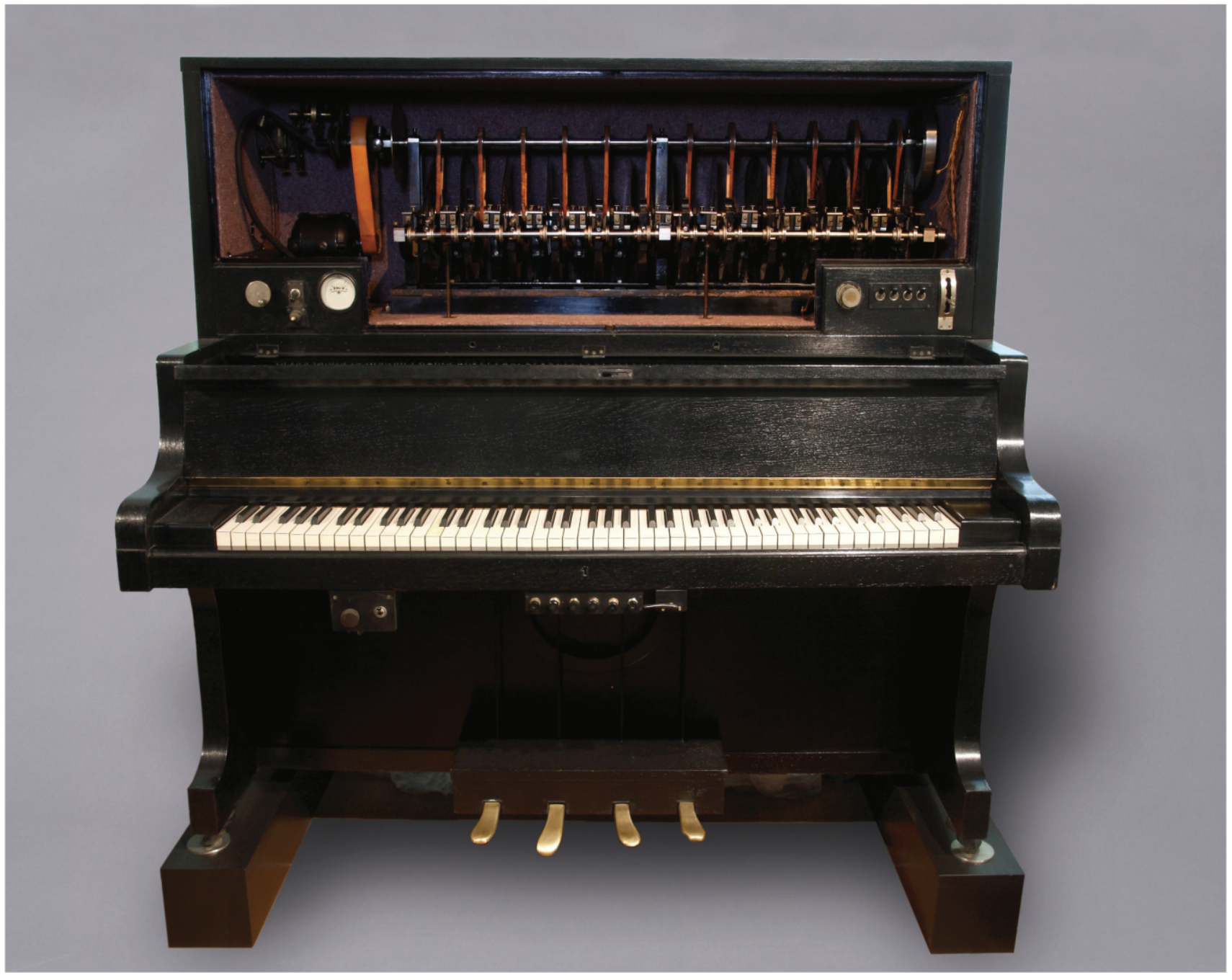
Photoelectric Instruments Part II: The Superpiano (Electronic Perspectives August 1977)
As explained in last month’s column, a “light chopper,” or rotating tone wheel, can be used to interrupt the light shining onto a photoelectric cell, generating alternating current that creates pitched sound. The Austrian Emerich Spielmann used the rudiments of this concept in his Superpiano, a photoelectric instrument developed during the early 1930s. But before…
-
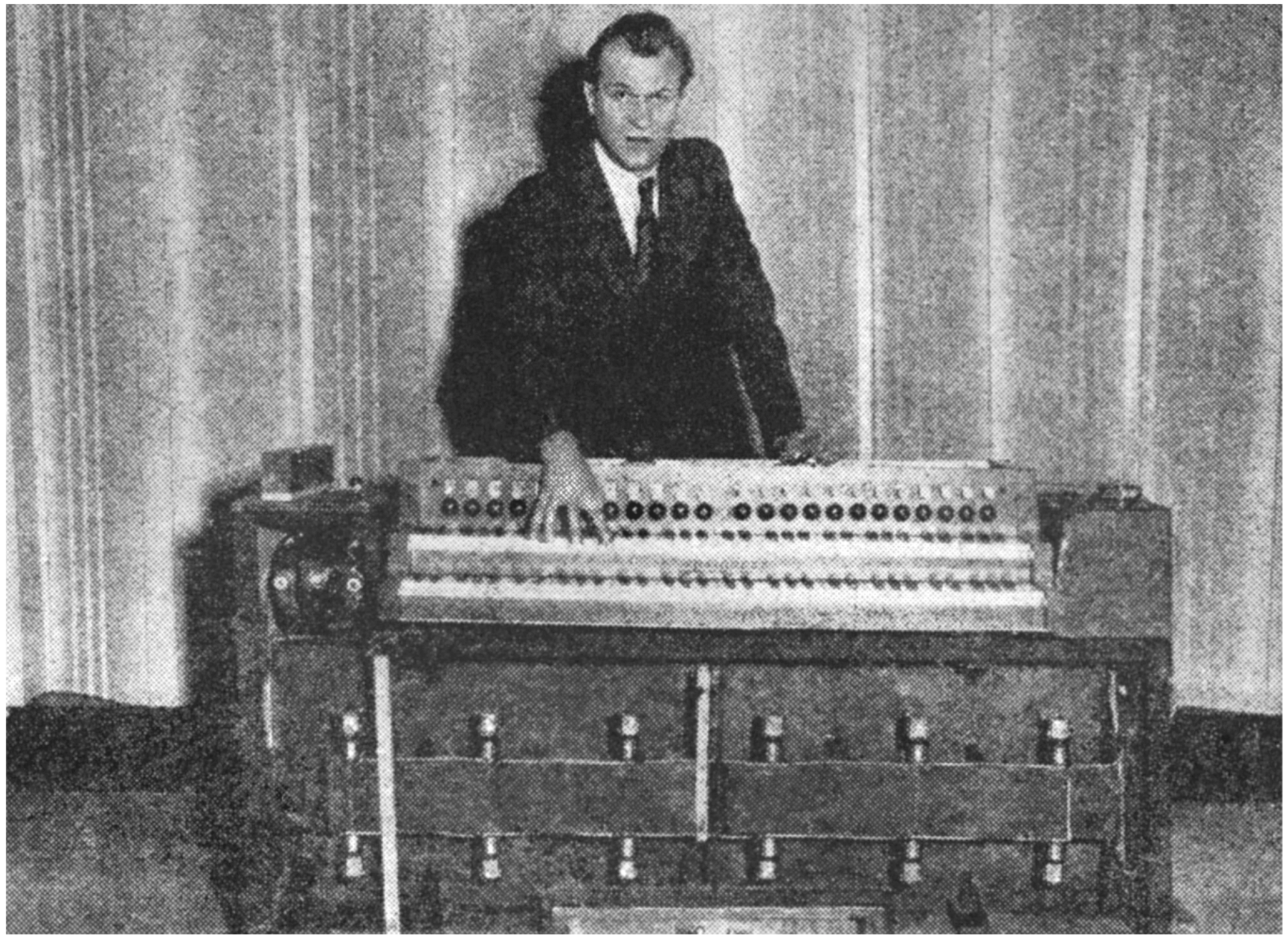
Photoelectric Instruments Part I: The WCAU Photona (Electronic Perspectives July 1977)
The photoelectric tone generator is one of the oldest and most popular designs for early electric musical instruments. The roots of this idea can be traced to 1890, when Ernest J.P. Mercadier used a rotating light interrupter with light-sensitive cells to create frequencies used for multiplex telegraphy. (This made it possible to send many messages…
-
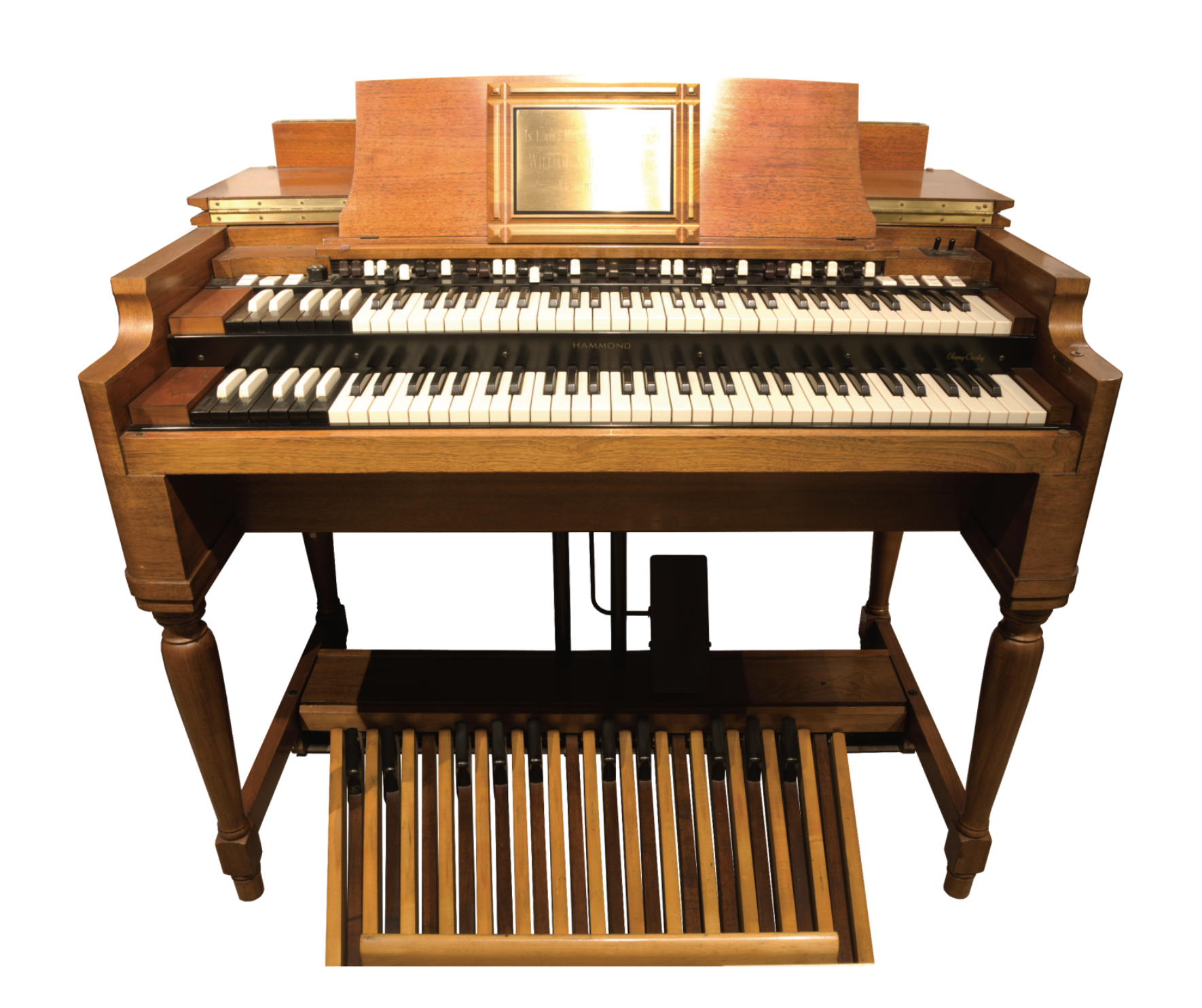
The Hammond Organ Part II: Hammond and The FTC (Electronic Perspectives June 1977)
Marshall McLuhan, media sage, says that the content of a new medium is likely to be an older medium. Some of the early movies contained vaudeville, and the content of television is often the older medium of film. When the videotape system becomes commonplace, its primary content will probably be television. Perhaps the content of…
-
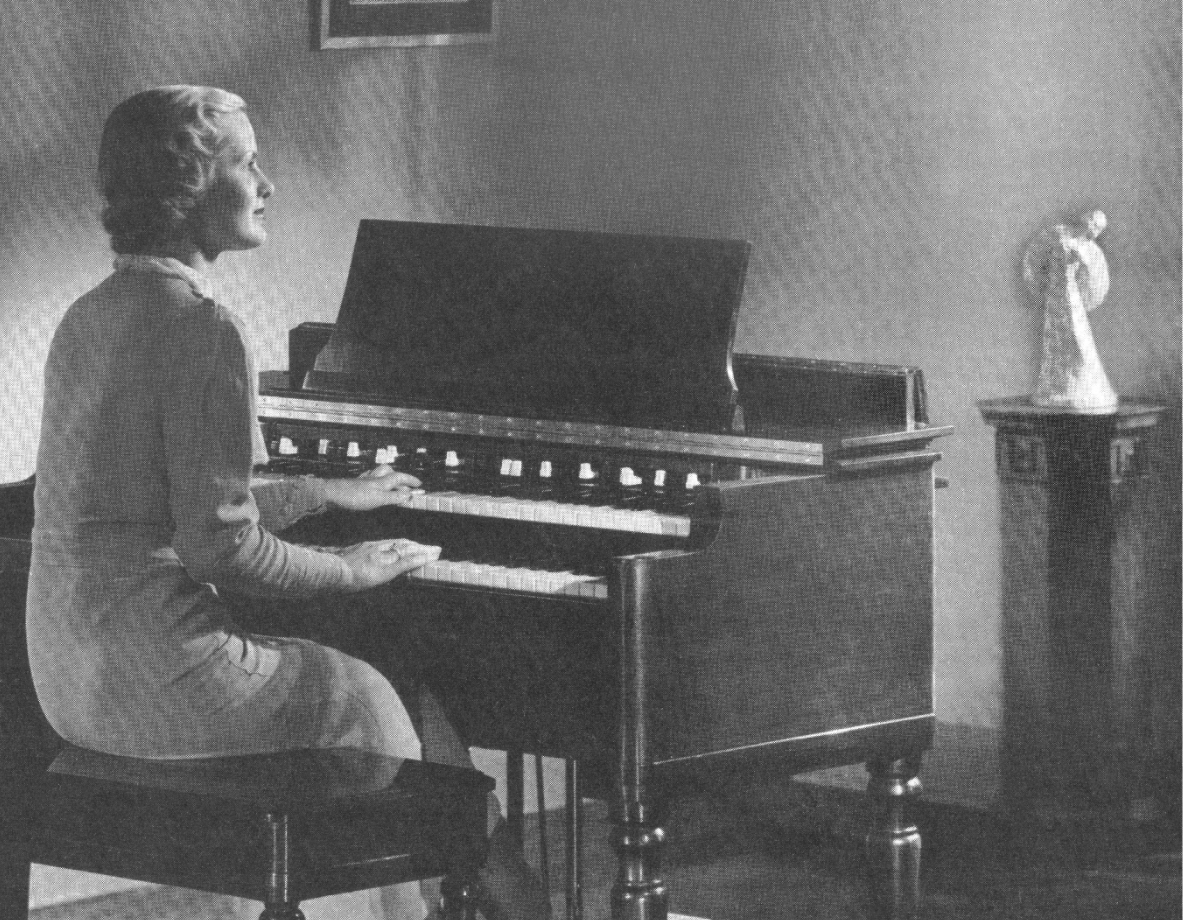
The Hammond Organ Part I (Electronic Perspectives May 1977)
The father of the Hammond Organ may have been a clock. At least, the tone-wheel Hammond Organ is driven by a synchronous motor similar in design to the motor of the electric clock that was the first product of the Hammond Company. The secret of this clock’s accuracy was the motor which synchronized its speed…